
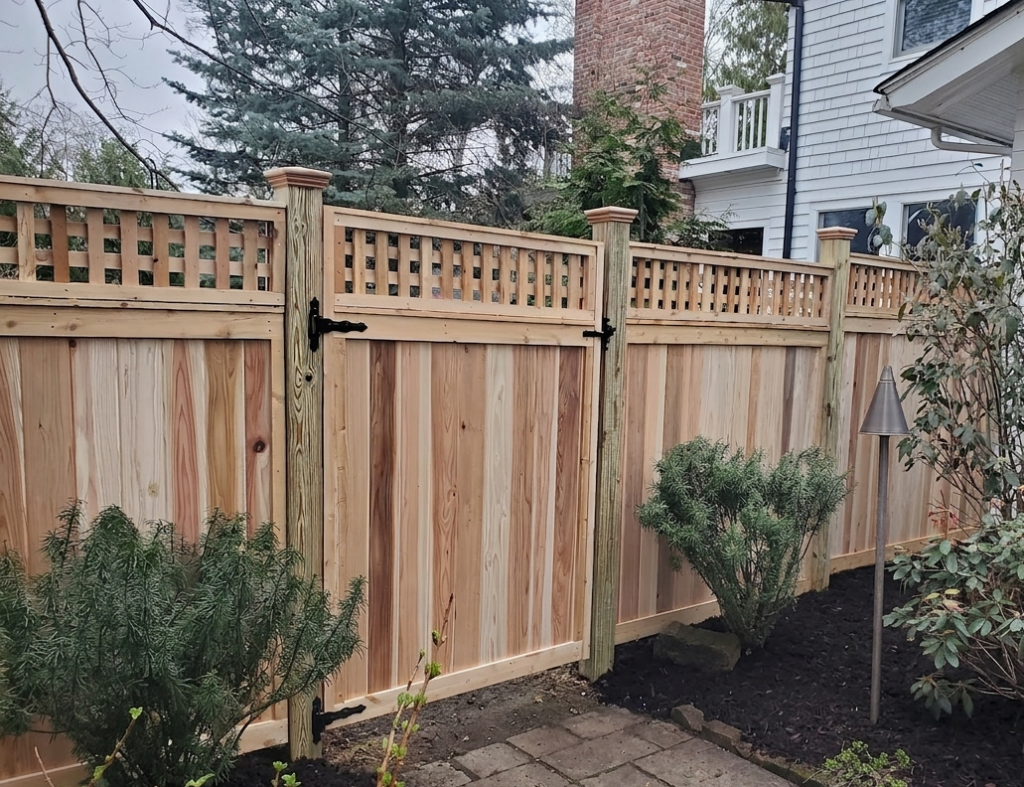
If you’re thinking about installing a new fence, one of your biggest concerns is likely cost. A number of factors influence the overall cost of a fence. Here are a few things to think about.
Material
Material is usually the driving factor when determining cost, and some materials are more affordable than others. Chain link and post-and-rail fencing tend to be priced similarly and are typically the go-to for more affordable options. Aluminum and vinyl fences tend to cost more, though pricing can vary by style. Aluminum comes in different grades, commercial and residential, so the cost varies between the two. Wood fences come in many types of wood, and different grades, so cost varies widely.
Sometimes, we advise our customers to use multiple materials on their property. For example, we’ll use aluminum in the areas visible from the street or the house, and chain link in areas that are hidden, like a back property line. It’s a practical way to manage cost without compromising on aesthetics.
If you’re comparing quotes from different contractors, it’s important to make sure you’re comparing apples to apples. Not all materials are manufactured the same way, even in the same product line. For example, the vinyl fence we install carries a lifetime warranty on the material, but some vinyl fencing on the market only carries a 10-year warranty. While this may mean higher upfront costs, you can feel confident that you’re installing the highest quality material with a strong warranty backing.
Also worth noting: material prices will shift with market conditions. For the most accurate quote, you will need to speak to a contractor.
Labor
Experienced installers cost a business more to employ, and that cost inevitably gets passed along to the consumer. If you want the assurance that your fence is properly installed, you’re generally going to pay more. Most customers find it’s worth it to pay now for a fence that holds up well in the future. A fence that’s installed poorly could end up costing more in the long run.
Ease of Installation
A standard, straight-line installation on flat, accessible ground is the most efficient job for an installer. Custom installations take more time to plan and execute, increasing the cost.
Here are a few specific things that can impact installation cost:
- Site conditions. Rocky soil, rough terrain, ledge, and hills all add time to a job.
- Site accessibility. Sometimes, machinery can’t get to the job site, so holes need to be dug by hand.
- Installing in stages. A fence that needs to be done in phases will require repeat trips and added costs.
- Turns and angles. A fence line with multiple breaks, corners, or angles takes longer to install than a straight run.
- Installing in concrete or asphalt. This requires drilling instead of standard digging, which means specialized tools and more time on site.
Size of the Job
Fencing is priced by linear foot, so a longer fence line costs more than a shorter one. Gates are priced separately from the fence itself, so the more gates a project includes, the higher the added cost.
Location
Travel time and fuel costs factor into pricing too, so a job further from an installer’s home base will likely incur these costs.
Getting an Accurate Number
Keep all of these factors in mind when beginning the conversation about your fence. Understanding how all of these things can impact your overall job will empower you to ask the right questions and compare quotes with confidence.
Of course, the best way to know what your project will cost is to schedule an on-site estimate. We’ll look at the terrain, talk through material options, answer your questions and put together a detailed proposal.
If you’re ready to get real numbers for your project, reach out to schedule a free estimate. We serve homeowners throughout Orange County NY, Ulster County NY, and Sussex County NJ, including Warwick, Goshen, Middletown, Pine Bush, and the surrounding communities.